Introduction
Uterine prolapse is a pelvic floor condition in which the uterus descends from its normal position because the muscles and supporting tissues become weakened. In more advanced cases, the uterus may extend into or beyond the vaginal opening, causing pressure, discomfort, urinary problems, and difficulty performing everyday activities.
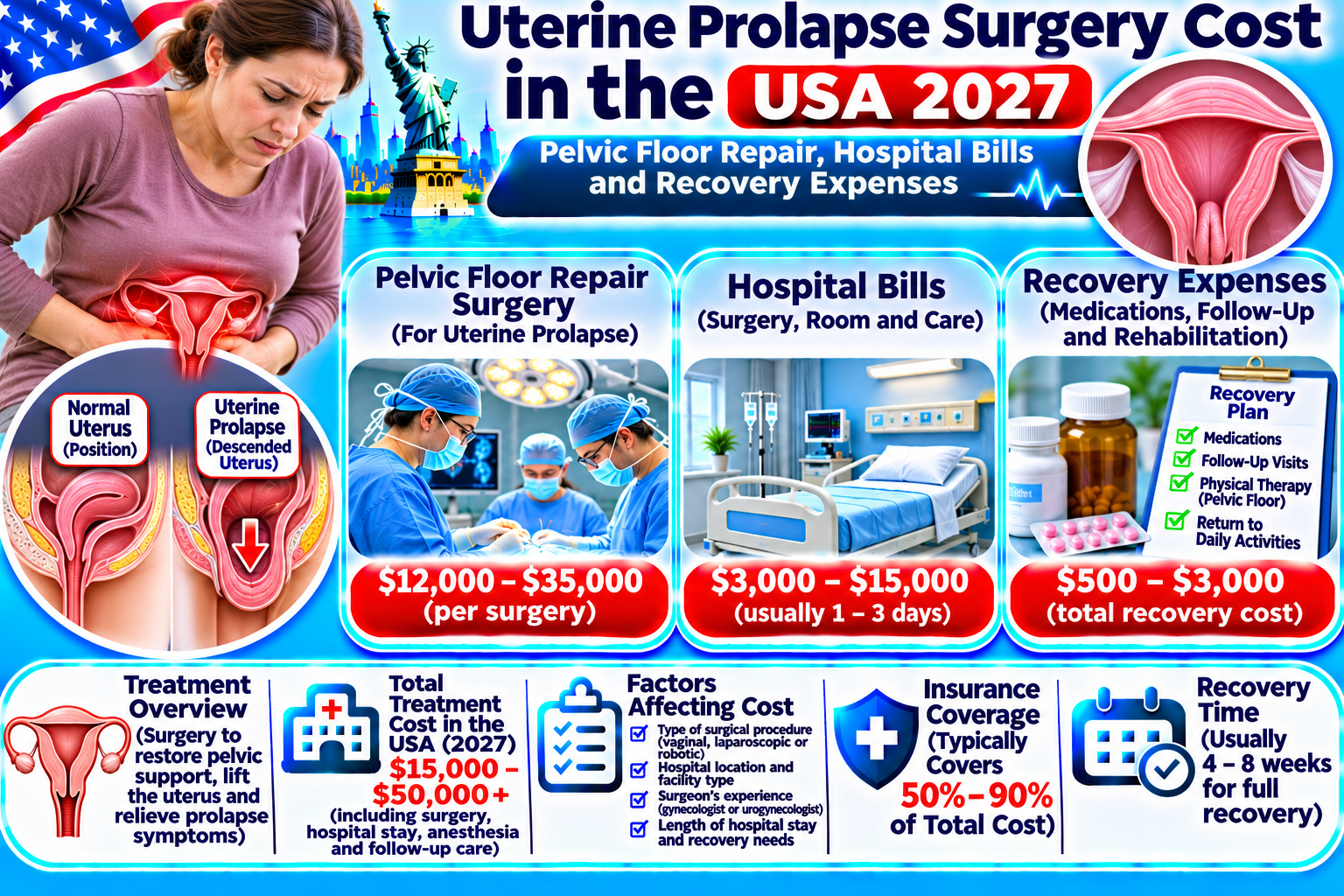
Understanding uterine prolapse surgery costs in the USA in 2027 is important for patients comparing pelvic floor repair, hysterectomy, uterine suspension, surgeon fees, hospital bills, anesthesia, and recovery expenses. Treatment costs vary according to prolapse severity, surgical technique, medical history, insurance coverage, and healthcare facility.
Not every patient requires surgery. Mild prolapse may be managed with pelvic floor exercises, a vaginal pessary, or observation. Surgery is generally considered when symptoms significantly affect quality of life and nonsurgical treatment is insufficient or unsuitable.
This guide explains estimated American uterine prolapse treatment expenses for 2027, including surgical options, cost comparisons, insurance benefits, recovery, and financial planning.
What Is Uterine Prolapse?
The uterus is normally supported by pelvic muscles, ligaments, and connective tissues. When these structures weaken, the uterus may move downward into the vagina.
Uterine prolapse is one form of pelvic organ prolapse. Other pelvic organs, including the bladder or rectum, may also descend because of weakened support.
Pelvic organ prolapse becomes more common with age, childbirth history, and changes in connective tissue strength.
The condition is usually not life-threatening, but severe symptoms can affect comfort, bladder function, bowel movements, and sexual well-being.
Common Symptoms of Uterine Prolapse
- A feeling of pressure or heaviness in the pelvis.
- A visible or noticeable vaginal bulge.
- Discomfort during prolonged standing.
- Difficulty emptying the bladder completely.
- Urinary leakage or frequent urination.
- Constipation or difficulty with bowel movements.
- Lower back discomfort.
- Discomfort during sexual activity.
Symptoms vary considerably. Some patients have anatomical prolapse without significant discomfort, while others experience substantial disruption to daily activities.
Causes and Risk Factors
Several factors can contribute to weakening of the pelvic floor and uterine support structures.
- Pregnancy and vaginal childbirth.
- Aging and menopause-related tissue changes.
- Obesity and increased abdominal pressure.
- Chronic constipation or repeated straining.
- Persistent coughing.
- Heavy physical lifting.
- Previous pelvic surgery.
- Inherited connective tissue characteristics.
Having one or more risk factors does not mean surgery will be necessary.
How Is Uterine Prolapse Diagnosed?
A gynecologist or urogynecologist usually diagnoses uterine prolapse through a medical history and pelvic examination.
The clinician evaluates the position of the uterus and other pelvic organs, often while the patient strains gently.
Additional testing may be recommended when urinary or bowel symptoms are present.
Diagnostic services may include:
- Pelvic examination.
- Pelvic organ prolapse quantification assessment.
- Urinalysis when indicated.
- Bladder emptying evaluation.
- Urodynamic testing in selected cases.
- Pelvic imaging for unusual or complex findings.
Accurate assessment helps identify the affected structures and determine whether surgery is appropriate.
Nonsurgical Treatment Options
Pelvic Floor Physical Therapy
Pelvic floor exercises and supervised physical therapy may improve symptoms in selected patients, especially those with mild prolapse.
A trained pelvic floor therapist can provide individualized exercises and guidance for managing pressure on pelvic structures.
Vaginal Pessary
A pessary is a removable medical device placed inside the vagina to support pelvic organs.
It may provide symptom relief without surgery and can be suitable for patients who prefer conservative treatment.
Regular follow-up is important to ensure proper fitting and monitor vaginal tissue health.
Observation and Lifestyle Changes
Patients with minimal symptoms may choose monitoring rather than immediate intervention.
Managing constipation, maintaining a healthy weight, and avoiding excessive straining may help reduce symptoms.
Types of Uterine Prolapse Surgery
Vaginal Hysterectomy With Prolapse Repair
A vaginal hysterectomy removes the uterus through the vagina. When performed for prolapse, additional support procedures are often needed to reduce the risk of future vaginal vault prolapse.
Surgeons may combine hysterectomy with uterosacral ligament suspension or other pelvic floor repairs.
Uterosacral Ligament Suspension
This procedure uses supportive ligaments within the pelvis to secure the upper vagina or uterus in an appropriate position.
It may be performed through a vaginal or minimally invasive abdominal approach, depending on the surgical plan.
Sacrospinous Ligament Fixation
Sacrospinous ligament fixation attaches the upper vaginal support structures to a strong pelvic ligament.
It is commonly performed through a vaginal approach and may be used with other prolapse repairs.
Sacrohysteropexy
Sacrohysteropexy is a uterus-preserving operation that uses a supportive graft to suspend the uterus toward the sacrum.
It may be performed laparoscopically or with robotic assistance in selected patients.
Patients should discuss the benefits, alternatives, and implant-related risks with their surgeon.
Sacrocolpopexy
Sacrocolpopexy supports the upper vagina, generally after hysterectomy, by attaching it toward the sacrum using a surgical graft.
It can be performed through open, laparoscopic, or robotic techniques.
Colpocleisis
Colpocleisis closes part or most of the vaginal canal to support prolapsed organs.
It is an option for selected patients who do not wish to retain the ability to have vaginal intercourse.
Uterine Prolapse Surgery Cost in the USA in 2027
American uterine prolapse surgery expenses depend on the selected procedure, surgical facility, anesthesia, additional pelvic repairs, and postoperative care.
The following figures are illustrative 2027 budgeting estimates rather than verified national averages, guaranteed quotations, or actual insurance payments.
Estimated USA Cost Breakdown
| Treatment or Service | Estimated Cost (USD) |
|---|---|
| Gynecologist Consultation | $150–$500+ |
| Urogynecologist Consultation | $200–$600+ |
| Pelvic Floor Physical Therapy | $100–$300+ per session |
| Pessary Fitting and Device | $150–$700+ |
| Vaginal Hysterectomy With Repair | $12,000–$30,000+ |
| Vaginal Suspension or Pelvic Floor Repair | $10,000–$25,000+ |
| Laparoscopic Prolapse Repair | $15,000–$35,000+ |
| Robotic-Assisted Prolapse Repair | $18,000–$45,000+ |
| Colpocleisis | $8,000–$22,000+ |
| Surgeon Professional Fee | $1,500–$6,000+ if separately billed |
| Anesthesia Professional Fee | $500–$2,500+ if separately billed |
| Postoperative Follow-Up Visit | $100–$350+ |
Important: These hypothetical ranges are intended for preliminary financial planning. Surgical episode prices may already include the surgeon, hospital, anesthesia, and recovery room charges. Do not add individual components without checking for overlap.
USA Uterine Prolapse Treatment Cost Comparison
Because this guide focuses on the United States, the following table compares American treatment scenarios rather than different countries.
| USA Treatment Scenario | Illustrative Overall Budget |
|---|---|
| Conservative Treatment With Pessary and Therapy | $300–$2,500+ |
| Vaginal Prolapse Repair | $10,000–$25,000+ |
| Vaginal Hysterectomy With Support Repair | $12,000–$30,000+ |
| Laparoscopic or Robotic Prolapse Surgery | $15,000–$45,000+ |
| Complex Multicompartment Pelvic Reconstruction | $25,000–$60,000+ |
These scenarios involve different clinical needs and should not be considered interchangeable treatments based on price alone.
Pelvic Floor Surgeon and Urogynecologist Fees
Uterine prolapse surgery is commonly performed by a gynecologist or urogynecologist with experience in pelvic reconstructive procedures. Professional fees depend on surgical complexity, the number of pelvic compartments requiring repair, and whether additional procedures are performed.
Patients may receive separate bills for the surgeon, anesthesiologist, hospital facility, and diagnostic testing. Before surgery, requesting an itemized estimate helps clarify which charges are included.
Hospital Bills and Surgical Facility Expenses
Hospital expenses are a major component of pelvic organ prolapse surgery costs. Charges may include operating room services, nursing care, surgical instruments, anesthesia supplies, medications, and recovery monitoring.
Many prolapse procedures can be performed in an outpatient setting. However, patients with complex medical needs or extensive reconstruction may require inpatient care.
Research examining US pelvic organ prolapse operations during 2016–2018 found a median estimated healthcare cost of approximately $8,958 per procedure in 2018. This historical provider-cost figure is not equivalent to a current hospital bill or a 2027 patient payment.
Vaginal Repair vs Robotic Surgery Costs
Vaginal repair often uses the patient’s own tissues and may require fewer specialized disposable instruments than minimally invasive abdominal surgery.
Robotic-assisted procedures can involve additional equipment, instruments, and operating room resources.
One published hospital study found average institutional costs of approximately $17,422 for minimally invasive sacrocolpopexy compared with $13,001 for native-tissue vaginal repair with hysterectomy.
These were hospital costs rather than standardized prices charged to patients. The best surgical approach depends on medical suitability, not cost alone.
Surgical Mesh and Additional Expenses
Some abdominal prolapse reconstruction procedures use surgical mesh to provide structural support. Patients should discuss the expected benefits and possible complications with their surgeon.
In 2019, the US Food and Drug Administration ordered manufacturers to stop selling surgical mesh intended for transvaginal repair of pelvic organ prolapse.
This restriction does not prohibit appropriately indicated abdominal sacrocolpopexy mesh. It also does not mean that all pelvic floor operations require mesh.
Mesh-related complications can sometimes require additional treatment, increasing long-term healthcare expenses.
Uterine Prolapse Surgery With Health Insurance
Many comprehensive American health insurance plans cover medically necessary uterine prolapse surgery when applicable clinical requirements are satisfied.
However, insurance coverage does not necessarily eliminate personal expenses.
Important considerations include:
- Annual deductible and out-of-pocket maximum.
- Surgeon and hospital network participation.
- Prior authorization requirements.
- Coverage for hysterectomy or uterine-preserving surgery.
- Anesthesia and facility benefits.
- Coverage for additional bladder or vaginal repairs.
- Physical therapy and rehabilitation benefits.
- Postoperative medications and follow-up appointments.
Patients should obtain a personalized estimate based on their actual insurance policy and proposed procedure.
Medicare Coverage for Pelvic Organ Prolapse
Original Medicare may cover medically necessary pelvic organ prolapse surgery when applicable coverage requirements are met.
Medicare Part A generally applies to qualifying inpatient hospital admissions, while Part B commonly covers eligible outpatient surgery and physician services.
Patient expenses depend on deductibles, coinsurance, the care setting, and any supplemental coverage.
Medicare Advantage plans may have different provider networks, authorization requirements, and cost-sharing arrangements.
Medicaid and Financial Assistance
Medicaid may cover medically necessary prolapse treatment for eligible individuals, depending on state-specific benefits.
Some nonprofit hospitals offer financial assistance programs. Patients can ask hospital financial counselors about eligibility and payment arrangements.
Uterine Prolapse Surgery Without Insurance
Uninsured patients may face substantial expenses for consultations, surgery, anesthesia, medications, and recovery care.
Before accepting a planned treatment quotation, patients should ask:
- Are surgeon and anesthesia fees included?
- Does the price include all planned pelvic repairs?
- Are hospital and recovery room charges included?
- Will an overnight admission cost extra?
- Are postoperative medications included?
- How many follow-up visits are covered?
Written estimates should clearly identify included services and possible additional charges.
Factors Influencing Uterine Prolapse Surgery Prices
1. Severity of Prolapse
Advanced prolapse involving multiple pelvic organs may require more extensive reconstruction and additional surgical resources.
2. Surgical Technique
Vaginal, laparoscopic, and robotic-assisted procedures involve different equipment and facility costs.
3. Hospital and Surgeon Fees
Operating room time, professional services, staffing, and hospitalization length affect total expenses.
4. Insurance Coverage
Deductibles, negotiated rates, provider networks, and authorization requirements influence personal financial responsibility.
5. Geographic Location
Healthcare prices vary across American states and cities because of regional operating expenses and insurance arrangements.
6. Medications and Rehabilitation
Postoperative prescriptions, physical therapy, and additional specialist appointments can increase recovery expenses.
7. Complications or Repeat Surgery
Unexpected complications or recurrent prolapse may require additional treatment and increase long-term costs.
Recovery After Uterine Prolapse Surgery
Recovery depends on the surgical approach, overall health, and whether additional pelvic repairs were performed.
Many patients need several weeks before returning to normal activities. Surgeons commonly recommend temporary restrictions on heavy lifting, vigorous exercise, and vaginal intercourse.
Patients should follow individualized instructions regarding wound care, activity, constipation prevention, and postoperative appointments.
Possible Complications and Additional Costs
Potential complications include bleeding, infection, bladder or bowel injury, urinary retention, pain, and recurrent prolapse.
Some patients experience new or persistent urinary symptoms after surgery.
Complications may require additional medication, imaging, specialist visits, or further procedures.
Long-Term Follow-Up Expenses
After surgery, patients may require pelvic examinations, urinary symptom assessments, and rehabilitation.
Prolapse can recur even after successful treatment. Maintaining follow-up care helps identify problems and guide appropriate management.
How to Reduce Uterine Prolapse Surgery Costs
- Verify insurance benefits before scheduled surgery.
- Request a complete written surgical estimate.
- Confirm surgeon and facility network participation.
- Ask whether additional pelvic repairs are included.
- Compare appropriate outpatient facility options.
- Review physical therapy and medication coverage.
- Explore hospital financial assistance programs.
- Discuss nonsurgical options when medically appropriate.
Frequently Asked Questions
How much does uterine prolapse surgery cost in the USA in 2027?
Illustrative surgical expenses may range from approximately $10,000 to $30,000 for selected vaginal procedures. Complex laparoscopic or robotic repairs may cost more.
Does insurance cover uterine prolapse surgery?
Many comprehensive health plans cover medically necessary procedures, subject to clinical requirements and patient cost-sharing.
Does Medicare cover pelvic floor repair?
Medicare may cover qualifying medically necessary pelvic floor surgery under applicable inpatient or outpatient benefits.
Is hysterectomy always required?
No. Some patients are candidates for uterus-preserving procedures. The appropriate choice depends on symptoms, anatomy, medical history, and personal preferences.
How long does recovery take?
Recovery commonly takes several weeks, although the timeline depends on the operation and individual circumstances.
Can uterine prolapse return after surgery?
Yes. Recurrence is possible, and some patients require additional treatment later.
Conclusion
Uterine prolapse surgery costs in the USA in 2027 depend on pelvic floor repair technique, surgeon fees, hospital bills, anesthesia, recovery requirements, and insurance coverage.
Patients should compare complete treatment estimates, verify insurance benefits, and consult an experienced gynecologist or urogynecologist before selecting a procedure.
Medical Disclaimer: This article provides general educational and financial planning information only. It does not replace professional medical advice, diagnosis, or treatment. All 2027 cost ranges are illustrative estimates and should be verified directly with healthcare providers, hospitals, and insurance companies.
