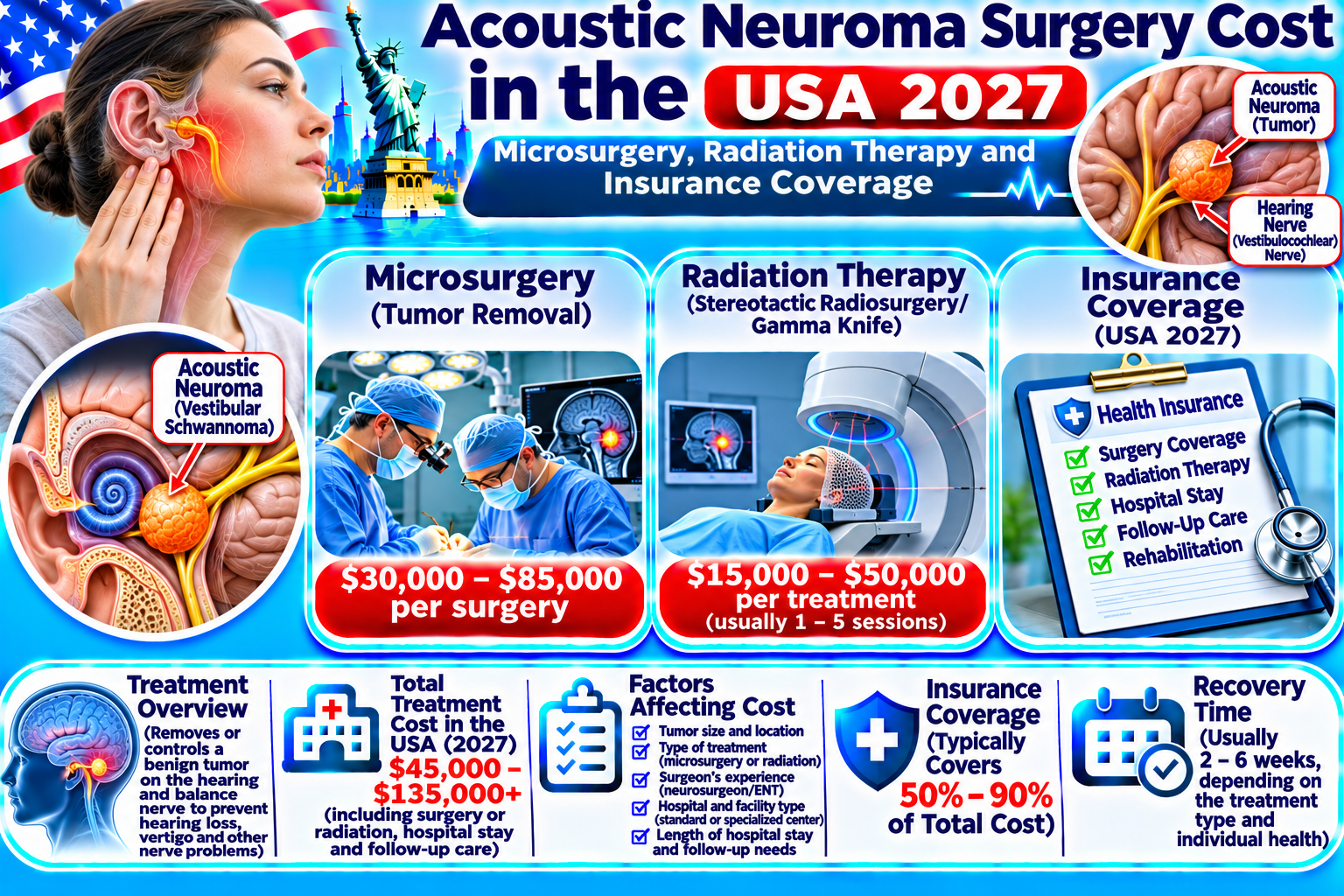
Acoustic neuroma, also known as vestibular schwannoma, is a usually benign, slow-growing tumor that develops from Schwann cells associated with the vestibular portion of the eighth cranial nerve. This nerve plays an important role in hearing and balance. Although acoustic neuromas are generally noncancerous, larger tumors can compress nearby nerves and brain structures, causing significant neurological symptoms.
Understanding acoustic neuroma surgery costs in the USA in 2027 is important for patients comparing microsurgery, stereotactic radiosurgery, radiation therapy, neurosurgeon fees, hospital expenses, and health insurance coverage.
Treatment depends on tumor size, growth rate, hearing function, symptoms, age, and overall health. Some patients require surgery, while others may benefit from focused radiation or regular MRI surveillance.
This guide explains estimated American acoustic neuroma treatment expenses for 2027, including diagnostic testing, surgical approaches, Gamma Knife treatment, Medicare coverage, recovery, and long-term financial considerations.
What Is an Acoustic Neuroma?
An acoustic neuroma is a tumor that usually develops along the vestibular nerve, which connects the inner ear to the brain.
Most acoustic neuromas grow slowly, although growth patterns vary. Some remain stable for years, while others enlarge and require treatment.
As a tumor grows, it may affect hearing, balance, facial sensation, or nearby brain structures.
Large tumors can compress the brainstem or interfere with normal cerebrospinal fluid circulation.
Because treatment can affect hearing and facial nerve function, careful planning by an experienced medical team is essential.
Common Symptoms of Acoustic Neuroma
Symptoms depend on tumor location, size, and effects on nearby nerves.
- Gradual hearing loss in one ear.
- Persistent ringing or buzzing in the ear.
- Balance difficulties or unsteadiness.
- Dizziness or vertigo.
- Facial numbness or tingling.
- Occasional facial weakness.
- Headaches in some patients.
- Neurological symptoms associated with larger tumors.
Sudden hearing loss requires prompt medical evaluation. Severe headache with neurological changes, confusion, or difficulty walking may require emergency care.
Causes and Risk Factors
Most acoustic neuromas occur sporadically without a clearly identifiable cause.
A smaller proportion are associated with inherited tumor-predisposition conditions, particularly neurofibromatosis type 2-related schwannomatosis.
Patients with bilateral vestibular schwannomas or a significant family history may need specialized genetic evaluation.
Acoustic neuroma is not generally caused by ordinary ear infections or common hearing problems.
How Is Acoustic Neuroma Diagnosed?
Diagnosis usually involves an examination by an ear, nose, and throat specialist, neurotologist, or neurologist.
Common diagnostic tests include:
- Hearing evaluation and audiometry.
- MRI of the brain and internal auditory canals.
- Neurological examination.
- Balance testing when appropriate.
- Facial nerve assessment.
- Additional imaging for selected surgical cases.
Contrast-enhanced MRI is commonly used to identify vestibular schwannomas and evaluate tumor size.
Repeated MRI examinations may be recommended to determine whether a small tumor is growing.
Acoustic Neuroma Treatment Options
Observation and MRI Monitoring
Not every acoustic neuroma requires immediate surgery or radiation.
For selected patients with small, stable tumors and limited symptoms, doctors may recommend observation with periodic MRI scans and hearing tests.
Monitoring still involves healthcare expenses, but it avoids the immediate risks of invasive treatment.
Microsurgical Tumor Removal
Microsurgery involves removing all or part of the tumor through a carefully selected skull-base surgical approach.
The operation is commonly performed by a neurosurgeon working with a neurotologist or other specialized surgical team.
The primary goals include controlling tumor growth, protecting facial nerve function, and preserving hearing when feasible.
Retrosigmoid Surgical Approach
The retrosigmoid approach accesses the tumor through an opening behind the ear.
It may be considered for tumors of different sizes and can sometimes offer an opportunity for hearing preservation.
The suitability of this approach depends on tumor anatomy and the patient’s hearing status.
Translabyrinthine Surgical Approach
The translabyrinthine approach accesses the tumor through structures of the inner ear.
This technique results in loss of hearing on the operated side and is generally considered when useful hearing is already absent or cannot realistically be preserved.
It can provide surgical access to the tumor and facial nerve.
Middle Cranial Fossa Approach
The middle cranial fossa approach may be used for selected small tumors in patients with useful hearing.
Its potential advantages and limitations depend on tumor location, size, and surgical expertise.
Stereotactic Radiosurgery
Stereotactic radiosurgery uses precisely focused radiation to control tumor growth without a conventional surgical incision.
Technologies include Gamma Knife and certain linear accelerator-based systems.
Despite its name, radiosurgery is a radiation treatment rather than open surgery.
The goal is usually to stop further growth rather than physically remove the tumor.
Fractionated Stereotactic Radiation Therapy
Fractionated stereotactic radiation delivers focused radiation over multiple sessions.
It may be considered when tumor characteristics or nearby sensitive structures favor dividing the radiation dose.
Acoustic Neuroma Treatment Cost in the USA in 2027
American acoustic neuroma treatment expenses vary according to tumor size, treatment approach, specialist expertise, hospital resources, and insurance arrangements.
A published systematic review reported substantial variation in vestibular schwannoma treatment costs, with historical inflation-adjusted averages of approximately $54,322 for microsurgical resection and $27,838 for radiosurgery.
These historical findings are useful context but do not establish actual 2027 prices.
The following figures are illustrative 2027 budgeting estimates rather than verified national averages, guaranteed hospital quotations, or actual patient payments.
Estimated USA Cost Breakdown
| Treatment or Service | Estimated Cost (USD) |
|---|---|
| Neurosurgeon Consultation | $200–$700+ |
| Hearing Test and Audiometry | $100–$500+ |
| Brain MRI With Contrast | $800–$3,500+ |
| MRI Surveillance and Specialist Monitoring | $1,000–$5,000+ annually |
| Microsurgical Tumor Removal | $40,000–$100,000+ |
| Complex Skull-Base Microsurgery | $70,000–$150,000+ |
| Gamma Knife Radiosurgery | $20,000–$45,000+ |
| Fractionated Stereotactic Radiation | $25,000–$55,000+ |
| Neurosurgeon Professional Fee | $3,000–$12,000+ if separately billed |
| Anesthesia Professional Fee | $1,000–$4,000+ if separately billed |
| Vestibular Rehabilitation Session | $100–$300+ per session |
| Follow-Up Specialist Appointment | $100–$400+ |
Important: These hypothetical ranges are for preliminary financial planning. Microsurgery and radiation episode estimates may already include specialist, hospital, equipment, anesthesia, and monitoring charges. Individual components should not be added without confirming what is included.
USA Acoustic Neuroma Treatment Cost Comparison
Because this article focuses on the United States, the following table compares American treatment scenarios rather than different countries.
| USA Treatment Scenario | Illustrative Overall Budget |
|---|---|
| Observation With MRI Monitoring | $1,000–$5,000+ annually |
| Gamma Knife Radiosurgery | $20,000–$45,000+ |
| Fractionated Radiation Therapy | $25,000–$55,000+ |
| Standard Microsurgical Removal | $40,000–$100,000+ |
| Complex Surgery With Extended Hospital Care | $70,000–$150,000+ |
These treatments are not interchangeable. Medical suitability depends on tumor characteristics, symptoms, hearing function, and the patient’s overall health.
Neurosurgeon and Neurotologist Fees
Acoustic neuroma microsurgery frequently requires a specialized team that includes a neurosurgeon and a neurotologist.
Professional fees depend on tumor complexity, surgical approach, operation duration, geographic location, and insurance contracts.
Some hospitals include physician charges in a bundled estimate, while others bill professional services separately.
Hospital and Intensive Care Expenses
Microsurgical removal generally requires inpatient monitoring because the operation involves delicate structures near the brainstem and cranial nerves.
Hospital expenses may include operating room services, specialized instruments, neurological monitoring, anesthesia, medications, and inpatient accommodation.
Patients with complications may require additional imaging, intensive care, or longer hospitalization, increasing overall treatment expenses.
Gamma Knife and Radiation Therapy Costs
Gamma Knife treatment uses precisely focused radiation beams to control tumor growth.
The procedure typically involves specialized imaging, treatment planning, radiation equipment, and a multidisciplinary medical team.
Many patients receive treatment without an overnight hospital stay, although individual requirements vary.
Radiation may be less expensive than microsurgery in some settings, but long-term MRI surveillance remains necessary.
Acoustic Neuroma Treatment With Health Insurance
Many comprehensive American health insurance plans cover medically necessary acoustic neuroma treatment when applicable requirements are satisfied.
Coverage may include microsurgery, stereotactic radiation, diagnostic imaging, and postoperative services.
Important insurance considerations include:
- Annual deductible and out-of-pocket maximum.
- Neurosurgeon and hospital network participation.
- Prior authorization for surgery or radiation.
- Coverage for MRI examinations.
- Anesthesia and inpatient hospital benefits.
- Radiation oncology coverage.
- Rehabilitation and hearing-related benefits.
- Follow-up imaging requirements.
Insurance approval does not necessarily eliminate personal expenses. Deductibles, copayments, and coinsurance may still apply.
Medicare Coverage for Acoustic Neuroma
Original Medicare may cover medically necessary acoustic neuroma surgery and qualifying radiation treatment when applicable requirements are met.
Medicare Part A generally applies to qualifying inpatient hospital admissions, while Part B commonly covers eligible outpatient procedures, physician services, and diagnostic testing.
Medicare Advantage plans may have different authorization requirements, provider networks, and cost-sharing arrangements.
Medicaid and Financial Assistance
Medicaid may cover medically necessary acoustic neuroma treatment for eligible individuals, depending on state-specific requirements.
Some nonprofit hospitals provide financial assistance programs. Patients can ask hospital financial counselors about eligibility and payment arrangements.
Treatment Without Insurance
Uninsured patients may face substantial expenses for surgery, radiation, imaging, hospitalization, and follow-up care.
Before accepting a planned treatment quotation, patients should ask:
- Are neurosurgeon and anesthesia fees included?
- Does the estimate cover hospital accommodation?
- Will intensive care be billed separately?
- Are radiation planning and equipment charges included?
- How many follow-up MRI scans are expected?
- What rehabilitation expenses should be anticipated?
Factors Influencing Acoustic Neuroma Treatment Prices
1. Tumor Size and Location
Larger tumors or tumors close to critical neurological structures may require more complex treatment and additional monitoring.
2. Treatment Method
Observation, microsurgery, and stereotactic radiation involve different equipment, staffing, and hospital resources.
3. Specialist and Hospital Fees
Professional services, operating room time, inpatient care, and specialized technology influence total costs.
4. Insurance Coverage
Deductibles, negotiated rates, provider networks, and authorization requirements affect patient financial responsibility.
5. Geographic Location
Healthcare prices vary across American cities and states because of regional operating expenses and insurance contracts.
6. Medications and Rehabilitation
Postoperative medications, balance therapy, hearing rehabilitation, and follow-up examinations can increase recovery expenses.
7. Complications and Additional Treatment
Unexpected complications, prolonged hospitalization, or further treatment may substantially increase medical spending.
Recovery After Acoustic Neuroma Surgery
Recovery depends on tumor size, surgical approach, neurological function, and overall health.
Patients may experience temporary fatigue, headaches, dizziness, or balance difficulties following surgery.
Hospitalization commonly lasts several days, while recovery before returning to normal activities may take several weeks or longer.
Some individuals benefit from vestibular rehabilitation to improve balance and coordination.
Possible Complications and Additional Costs
Microsurgery carries potential risks, including hearing loss, facial nerve weakness, cerebrospinal fluid leakage, infection, and balance problems.
Radiation treatment can also cause delayed hearing changes, facial nerve symptoms, or temporary tumor swelling.
Patients should discuss treatment-specific risks and expected benefits with their medical team.
Long-Term Follow-Up Expenses
Patients generally require periodic MRI examinations after observation, surgery, or radiation treatment.
Follow-up schedules depend on the treatment performed, residual tumor, symptoms, and specialist recommendations.
Some patients also need hearing aids, hearing rehabilitation, or additional balance therapy.
How to Reduce Acoustic Neuroma Treatment Costs
- Verify insurance benefits before planned treatment.
- Request a complete written hospital estimate.
- Confirm specialist and facility network participation.
- Ask whether anesthesia and imaging are included.
- Review Medicare or Medicaid eligibility.
- Explore hospital financial assistance programs.
- Discuss medically appropriate treatment options.
- Plan for follow-up imaging and rehabilitation.
Frequently Asked Questions
How much does acoustic neuroma surgery cost in the USA in 2027?
Illustrative microsurgical expenses may range from approximately $40,000 to $100,000 or more. Complex cases may exceed these amounts.
Is Gamma Knife cheaper than microsurgery?
Gamma Knife may cost less than microsurgery in some healthcare settings because it usually avoids an extended inpatient hospital stay.
Does insurance cover acoustic neuroma treatment?
Many comprehensive health plans cover qualifying medically necessary surgery or radiation, subject to policy requirements.
Does Medicare cover Gamma Knife treatment?
Medicare may cover medically necessary stereotactic radiosurgery when applicable clinical and coverage requirements are satisfied.
Can an acoustic neuroma return after treatment?
Yes. Residual tumor growth or recurrence can occur, making long-term imaging surveillance important.
Is acoustic neuroma cancer?
Acoustic neuroma is usually a benign tumor, but its location can cause serious neurological problems.
Conclusion
Acoustic neuroma treatment costs in the USA in 2027 depend on microsurgery, radiation therapy, neurosurgeon fees, hospital expenses, tumor complexity, and insurance coverage.
Patients should compare complete treatment estimates, verify insurance benefits, and consult an experienced skull-base treatment team before making decisions.
Medical Disclaimer: This article provides general educational and financial planning information only. It does not replace professional medical advice, diagnosis, or treatment. All 2027 prices are illustrative estimates and should be verified directly with healthcare providers, hospitals, and insurance companies.
