Introduction
Bone cancer is a serious medical condition that develops when abnormal cells grow uncontrollably within bone tissue. Primary bone cancers are relatively uncommon, but they can affect children, teenagers, and adults. Treatment often requires specialized surgery, chemotherapy, radiation therapy, or a combination of these approaches.
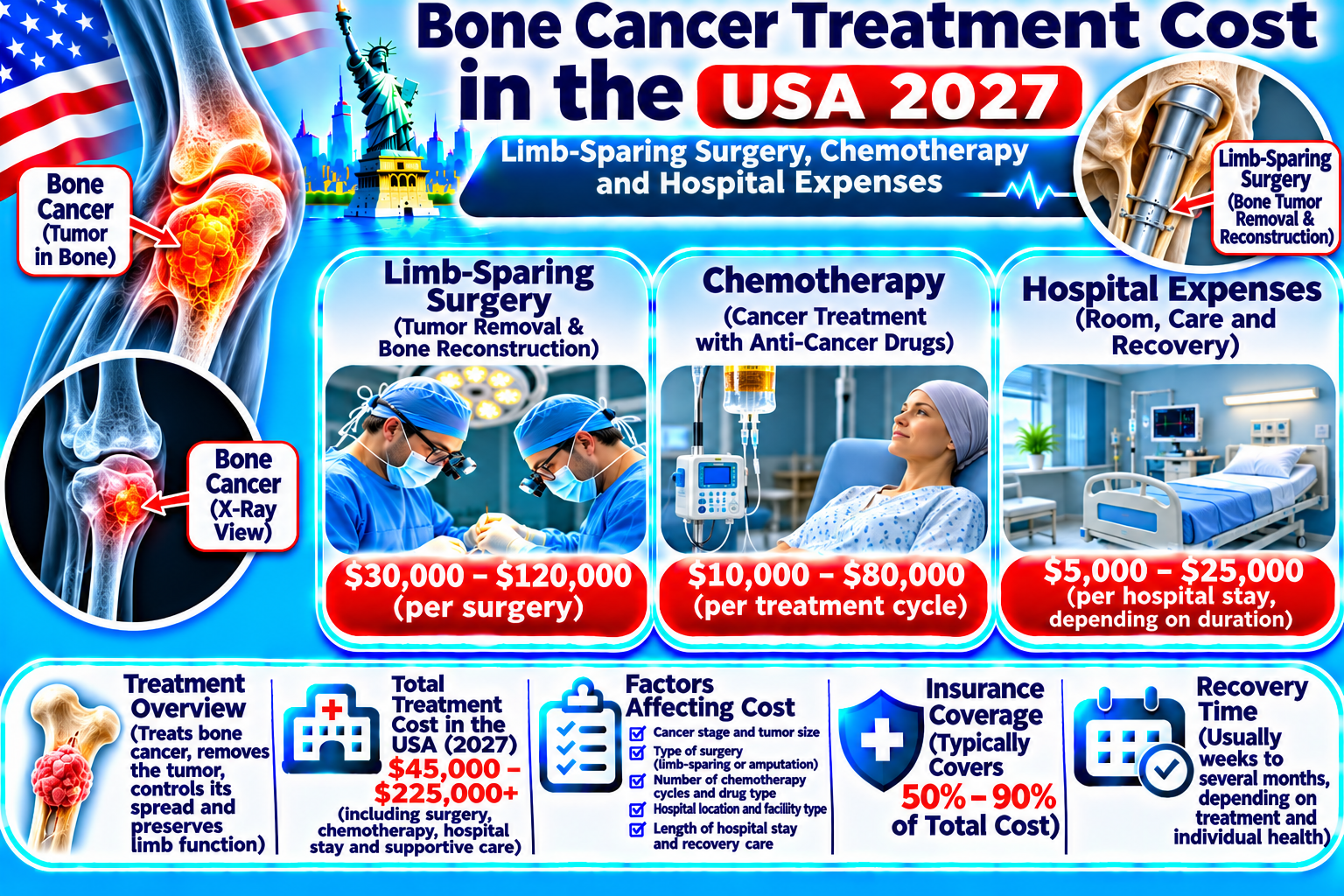
Understanding bone cancer treatment costs in the USA in 2027 is important for patients and families comparing limb-sparing surgery, orthopedic oncology surgeon fees, chemotherapy expenses, hospital bills, rehabilitation, and health insurance coverage.
The total cost depends on the cancer type, tumor size, stage, location, treatment intensity, and healthcare facility. Some patients require several months of chemotherapy and major reconstructive surgery, while others may need surgery alone or radiation-based treatment.
This comprehensive guide explains estimated American bone cancer treatment expenses for 2027, including diagnostic testing, limb-sparing surgery, chemotherapy, hospitalization, insurance benefits, and long-term recovery costs.
What Is Bone Cancer?
Bone cancer occurs when malignant cells develop in bone tissue. Primary bone cancer begins within the bone itself, while secondary bone cancer refers to cancer that has spread to bones from another part of the body.
These conditions have different treatment plans and financial implications. This article primarily focuses on primary malignant bone tumors.
Primary bone cancers may affect the arms, legs, pelvis, spine, or other skeletal structures. Treatment often involves a multidisciplinary team specializing in orthopedic oncology, medical oncology, radiation oncology, pathology, and rehabilitation.
Early diagnosis and appropriate treatment planning are important because bone tumors can weaken bones, damage surrounding tissues, and spread to distant organs.
Common Types of Primary Bone Cancer
Osteosarcoma
Osteosarcoma is a malignant bone tumor commonly diagnosed in children, adolescents, and young adults. It frequently develops near the knee or other rapidly growing bones.
Treatment usually involves chemotherapy and surgery. Limb-sparing reconstruction may be possible when the tumor can be removed safely.
Ewing Sarcoma
Ewing sarcoma is an aggressive cancer that can develop in bone or nearby soft tissue. It most commonly affects children, adolescents, and young adults.
Treatment generally involves multiagent chemotherapy combined with surgery, radiation therapy, or both.
Chondrosarcoma
Chondrosarcoma is a cancer involving cartilage-producing cells. It is more commonly diagnosed in adults.
Surgery is the principal treatment for many conventional chondrosarcomas because these tumors often respond poorly to standard chemotherapy.
Some rare chondrosarcoma subtypes require different treatment strategies.
Other Rare Bone Tumors
Other malignant bone tumors include chordoma and several uncommon sarcoma subtypes. These conditions may require highly specialized surgery, radiation, or systemic treatments.
Common Symptoms of Bone Cancer
Symptoms depend on tumor location, size, and effects on nearby tissues.
- Persistent bone pain that may worsen over time.
- Swelling or a noticeable lump near the affected bone.
- Pain during movement or physical activity.
- Reduced joint mobility.
- Unexplained fractures through weakened bone.
- Difficulty walking or using an affected limb.
- Fatigue or unintended weight loss in some patients.
- Neurological symptoms when a tumor affects the spine.
Persistent unexplained bone pain or swelling should be evaluated by a healthcare professional. Sudden severe pain with suspected fracture requires urgent assessment.
Causes and Risk Factors
The exact cause of many primary bone cancers is unknown. Most cases are not directly attributable to a single identifiable exposure.
Some recognized risk factors include:
- Certain inherited cancer-predisposition syndromes.
- Previous high-dose radiation exposure.
- Specific genetic changes associated with rare tumors.
- Paget disease of bone in selected older adults.
- Age-related risk patterns for particular bone cancers.
Having a risk factor does not mean a person will develop bone cancer.
How Is Bone Cancer Diagnosed?
Diagnosis requires careful evaluation by specialists familiar with bone tumors. Imaging and biopsy planning are particularly important because an improperly placed biopsy can complicate later surgery.
X-Rays
X-rays are often the first imaging test performed when persistent bone pain or a suspicious lesion is present.
They can identify abnormal bone destruction, unusual bone formation, and certain fractures.
Magnetic Resonance Imaging
MRI helps evaluate the tumor’s extent within the bone and surrounding soft tissues.
It is important for planning surgery and determining the relationship between the tumor, blood vessels, nerves, and nearby joints.
CT Scan and Chest Imaging
CT scans may provide additional information about bone structure and tumor characteristics.
Chest CT is often used to evaluate possible lung metastases, particularly in osteosarcoma and Ewing sarcoma.
PET Scan or Bone Imaging
Selected patients may require PET imaging or other whole-body studies to evaluate disease extent.
Bone Tumor Biopsy
A biopsy removes a small tissue sample for pathological examination.
The biopsy should ideally be planned by the specialist team responsible for definitive treatment.
Bone Cancer Treatment Options
Limb-Sparing Surgery
Limb-sparing surgery removes the malignant tumor while preserving the affected arm or leg whenever safe and feasible.
The surgeon removes the tumor with an appropriate margin of healthy tissue and reconstructs the remaining bone or joint.
Reconstruction may involve a metallic endoprosthesis, bone graft, or another specialized technique.
Amputation Surgery
Amputation may be necessary when a tumor cannot be removed with adequate margins while preserving a functional limb.
Although limb-sparing surgery is often preferred when appropriate, amputation can provide effective cancer control in selected circumstances.
Prosthetic fitting and rehabilitation may add significant long-term expenses.
Chemotherapy
Chemotherapy uses medications to destroy cancer cells or slow their growth.
Osteosarcoma and Ewing sarcoma frequently require combination chemotherapy over several months.
Treatment may be given before surgery, after surgery, or during both periods.
Radiation Therapy
Radiation therapy uses high-energy radiation to damage cancer cells.
It plays an important role in selected Ewing sarcoma cases and some other bone tumors.
Radiation is not routinely used in the same way for every bone cancer type.
Targeted and Specialized Treatments
Selected patients may qualify for targeted therapy, clinical trials, or other specialized treatments depending on tumor biology and available evidence.
These approaches are not standard for every patient and should be discussed with an experienced oncology team.
Bone Cancer Treatment Cost in the USA in 2027
American bone cancer treatment costs vary widely according to cancer subtype, stage, treatment duration, surgical reconstruction, and hospital resources.
The following figures are illustrative 2027 budgeting estimates rather than verified national averages, guaranteed hospital quotations, or actual insurance payments.
Estimated USA Cost Breakdown
| Treatment or Service | Estimated Cost (USD) |
|---|---|
| Orthopedic Oncologist Consultation | $200–$700+ |
| Bone X-Ray | $100–$500+ |
| MRI of Affected Bone | $700–$3,500+ |
| CT or PET Imaging | $800–$7,000+ |
| Image-Guided Bone Biopsy | $2,000–$8,000+ |
| Limb-Sparing Surgery With Reconstruction | $40,000–$120,000+ |
| Complex Pelvic or Major Bone Reconstruction | $70,000–$180,000+ |
| Amputation Surgery Episode | $25,000–$80,000+ |
| Multiagent Chemotherapy Course | $30,000–$150,000+ |
| Radiation Therapy Course | $15,000–$60,000+ |
| Surgeon Professional Fee | $3,000–$15,000+ if separately billed |
| Physical Therapy Session | $100–$350+ per session |
| Follow-Up Oncology Appointment | $150–$500+ |
Important: These hypothetical ranges are for preliminary planning. Surgery and chemotherapy episode estimates may include multiple services. Actual billed charges, insurer-negotiated prices, and patient out-of-pocket costs can differ substantially.
USA Bone Cancer Treatment Cost Comparison
Because this article focuses on the United States, the following table compares American treatment scenarios rather than different countries.
| USA Treatment Scenario | Illustrative Overall Budget |
|---|---|
| Surgery-Focused Treatment | $40,000–$120,000+ |
| Limb-Sparing Surgery With Chemotherapy | $80,000–$250,000+ |
| Chemotherapy With Surgery and Radiation | $100,000–$300,000+ |
| Complex or Advanced Bone Cancer Care | $150,000–$400,000+ |
These scenarios are not standardized treatment packages. Actual care plans vary substantially, and complications or prolonged treatment can increase costs beyond these illustrative ranges.
Limb-Sparing Surgery and Reconstruction Expenses
Limb-sparing surgery is one of the most complex procedures used to treat bone cancer. The operation aims to remove the malignant tumor while preserving as much useful limb function as possible.
After tumor removal, the surgeon may reconstruct the affected area using a metallic implant, bone graft, or specialized joint replacement.
Costs depend on the size of the removed bone segment, implant selection, surgical duration, and the need for additional specialists.
Reconstruction can involve substantial rehabilitation, and some patients require future operations to repair or replace implants.
Orthopedic Oncology Surgeon Fees
Bone cancer surgery is generally performed by an orthopedic oncologist or another surgeon experienced in complex tumor removal.
Professional fees vary according to the tumor’s location, surgical complexity, operating time, and insurance contracts.
Additional surgeons may be required when tumors involve major blood vessels, nerves, or other critical structures.
Patients should confirm whether the quoted surgical package includes every participating physician’s professional charges.
Hospital Bills and Inpatient Expenses
Hospital expenses represent a major component of bone cancer treatment costs in the United States.
Common hospital charges include:
- Operating room and surgical equipment.
- Hospital accommodation and nursing services.
- General anesthesia and recovery monitoring.
- Specialized reconstructive implants.
- Laboratory testing and diagnostic imaging.
- Blood transfusions when necessary.
- Medications and intravenous fluids.
- Intensive care monitoring in selected cases.
Hospitalization length varies according to surgical complexity, recovery progress, and complications.
A recent nationwide analysis of negotiated prices for major bone tumor resections found substantial variation across hospitals, insurers, and geographic markets. This demonstrates why patients should request individualized estimates rather than relying on one national price.
Chemotherapy Costs for Bone Cancer
Chemotherapy is an essential treatment for many patients with osteosarcoma and Ewing sarcoma.
Common chemotherapy medications used in selected treatment protocols include doxorubicin, cisplatin, methotrexate, cyclophosphamide, ifosfamide, and etoposide.
Not every patient receives every medication. Treatment protocols depend on the cancer subtype, age, organ function, and oncology recommendations.
Chemotherapy expenses include more than the medications themselves.
Additional charges may involve infusion center services, laboratory monitoring, anti-nausea medications, hydration, and treatment of complications.
Some chemotherapy regimens require inpatient administration and close monitoring, increasing overall treatment expenses.
Radiation Therapy Expenses
Radiation therapy is used for selected bone cancers, particularly when surgery cannot safely remove the entire tumor or when additional local treatment is required.
Radiation costs depend on the technique, number of sessions, treatment planning, and facility resources.
Advanced radiation technologies may involve higher equipment and planning expenses.
The oncology team determines whether radiation is medically appropriate for the particular cancer type.
Bone Cancer Treatment With Health Insurance
Many comprehensive American health insurance plans cover medically necessary bone cancer treatment, including surgery, chemotherapy, radiation, and diagnostic services.
However, insurance approval does not necessarily eliminate personal expenses.
Important insurance considerations include:
- Annual deductible and out-of-pocket maximum.
- Orthopedic oncologist and hospital network participation.
- Prior authorization for planned procedures.
- Coverage for chemotherapy medications.
- Radiation oncology benefits.
- Hospital admission and anesthesia coverage.
- Reconstructive implants and prosthetic devices.
- Physical therapy and rehabilitation benefits.
Patients should request a personalized estimate based on their actual insurance policy and proposed treatment plan.
Medicare Coverage for Bone Cancer
Original Medicare generally covers qualifying medically necessary cancer treatment when applicable coverage requirements are met.
Medicare Part A commonly applies to eligible inpatient hospital admissions, while Part B generally covers qualifying outpatient physician services, surgery, and certain chemotherapy treatments.
Medicare Part D may cover eligible prescription medications according to the patient’s drug plan.
Medicare Advantage plans may have different authorization requirements, provider networks, and cost-sharing arrangements.
Medicaid and Financial Assistance
Medicaid may cover medically necessary bone cancer treatment for eligible individuals, depending on state-specific requirements.
Children and young adults may qualify for particular state or federal healthcare assistance programs.
Some nonprofit hospitals provide financial assistance programs for qualifying patients.
Hospital financial counselors and oncology social workers can help patients understand available resources.
Bone Cancer Treatment Without Insurance
Uninsured patients may face substantial expenses for diagnostic testing, surgery, chemotherapy, hospitalization, and rehabilitation.
Before accepting a planned treatment quotation, patients should ask:
- Are surgeon and anesthesia fees included?
- Does the estimate include reconstructive implants?
- Will chemotherapy be billed separately?
- Are hospitalization and recovery charges included?
- What rehabilitation expenses are expected?
- Are follow-up imaging examinations covered?
- Does the hospital offer financial assistance?
Written estimates should identify included services, exclusions, and potential additional charges.
Factors Influencing Bone Cancer Treatment Prices
1. Cancer Type and Stage
Osteosarcoma, Ewing sarcoma, and chondrosarcoma require different treatment strategies. Advanced disease may involve additional systemic treatment and hospital care.
2. Surgical Complexity
Large tumors or those near important nerves and blood vessels may require extensive reconstruction and specialized surgical teams.
3. Chemotherapy Requirements
Medication selection, treatment duration, infusion services, and monitoring influence total chemotherapy expenses.
4. Hospital and Surgeon Fees
Operating room time, professional services, surgical implants, and inpatient accommodation contribute to overall costs.
5. Insurance Coverage
Deductibles, negotiated rates, provider networks, and authorization requirements affect personal financial responsibility.
6. Geographic Location
Healthcare prices vary across American states and cities because of regional operating expenses and insurance arrangements.
7. Complications and Additional Procedures
Infections, implant problems, treatment-related side effects, or recurrent cancer may require additional medical care.
Recovery After Limb-Sparing Surgery
Recovery depends on tumor location, reconstruction method, chemotherapy schedule, and overall health.
Patients may need several months of rehabilitation to improve strength, balance, and mobility.
Some individuals require braces, walking aids, or other supportive equipment.
Patients should follow individualized instructions regarding weight-bearing, wound care, exercise, and return to normal activities.
Possible Complications and Additional Costs
Bone cancer treatment carries potential risks, including infection, bleeding, blood clots, delayed healing, and reconstructive implant problems.
Chemotherapy may cause nausea, fatigue, low blood counts, infections, or organ-related side effects depending on the medications used.
Unexpected complications can increase hospitalization, medications, rehabilitation, and follow-up expenses.
Long-Term Follow-Up Expenses
Bone cancer survivors generally require regular follow-up appointments and imaging examinations to monitor for recurrence and treatment-related complications.
Long-term care may include orthopedic examinations, chest imaging, rehabilitation, and monitoring for delayed chemotherapy effects.
Some patients need future reconstructive procedures or prosthetic adjustments.
How to Reduce Bone Cancer Treatment Costs
- Verify insurance benefits before planned treatment.
- Request a complete written hospital estimate.
- Confirm oncology specialists and facilities are in-network.
- Ask whether surgical implants are included.
- Review chemotherapy and radiation coverage.
- Explore hospital financial assistance programs.
- Discuss clinical trial eligibility when appropriate.
- Plan for rehabilitation and long-term monitoring.
The least expensive treatment is not necessarily the safest or most effective option. Specialized cancer care and medical suitability should remain priorities.
Frequently Asked Questions
How much does bone cancer treatment cost in the USA in 2027?
Illustrative total treatment expenses may range from approximately $40,000 for selected surgery-focused care to more than $250,000 for complex treatment involving chemotherapy and major reconstruction.
How much does limb-sparing surgery cost?
Illustrative limb-sparing surgery expenses may range from approximately $40,000 to $120,000 or more, depending on tumor complexity and reconstruction requirements.
Does insurance cover bone cancer treatment?
Many comprehensive insurance plans cover medically necessary bone cancer surgery, chemotherapy, and radiation, subject to policy requirements and patient cost-sharing.
Does Medicare cover bone cancer surgery?
Medicare generally covers qualifying medically necessary cancer surgery under applicable inpatient or outpatient benefits.
Is chemotherapy always required for bone cancer?
No. Chemotherapy is important for osteosarcoma and Ewing sarcoma, but many conventional chondrosarcomas are primarily treated with surgery.
Can patients keep their limb after bone cancer surgery?
Many patients are candidates for limb-sparing surgery, depending on tumor size, location, and involvement of surrounding structures.
How long does recovery take?
Recovery may take several months or longer, particularly after major reconstruction and prolonged chemotherapy.
Conclusion
Bone cancer treatment costs in the USA in 2027 depend on limb-sparing surgery, chemotherapy, hospital expenses, cancer subtype, disease stage, rehabilitation, and insurance coverage.
Patients should compare complete treatment estimates, verify insurance benefits, and consult an experienced orthopedic oncology team before making treatment decisions.
Accurate diagnosis, coordinated cancer care, and consistent follow-up are essential for managing treatment outcomes and long-term healthcare expenses.
Medical Disclaimer: This article provides general educational and financial planning information only. It does not replace professional medical advice, diagnosis, or treatment. All 2027 cost ranges are illustrative estimates and should be verified directly with healthcare providers, hospitals, pharmacies, and insurance companies.
