Introduction
Pituitary tumor surgery is a specialized neurological procedure used to remove certain growths affecting the pituitary gland, a small hormone-producing organ located at the base of the brain. Although many pituitary tumors are benign, they can cause serious health problems by producing excessive hormones, interfering with normal hormone production, or compressing nearby structures, including the optic nerves.
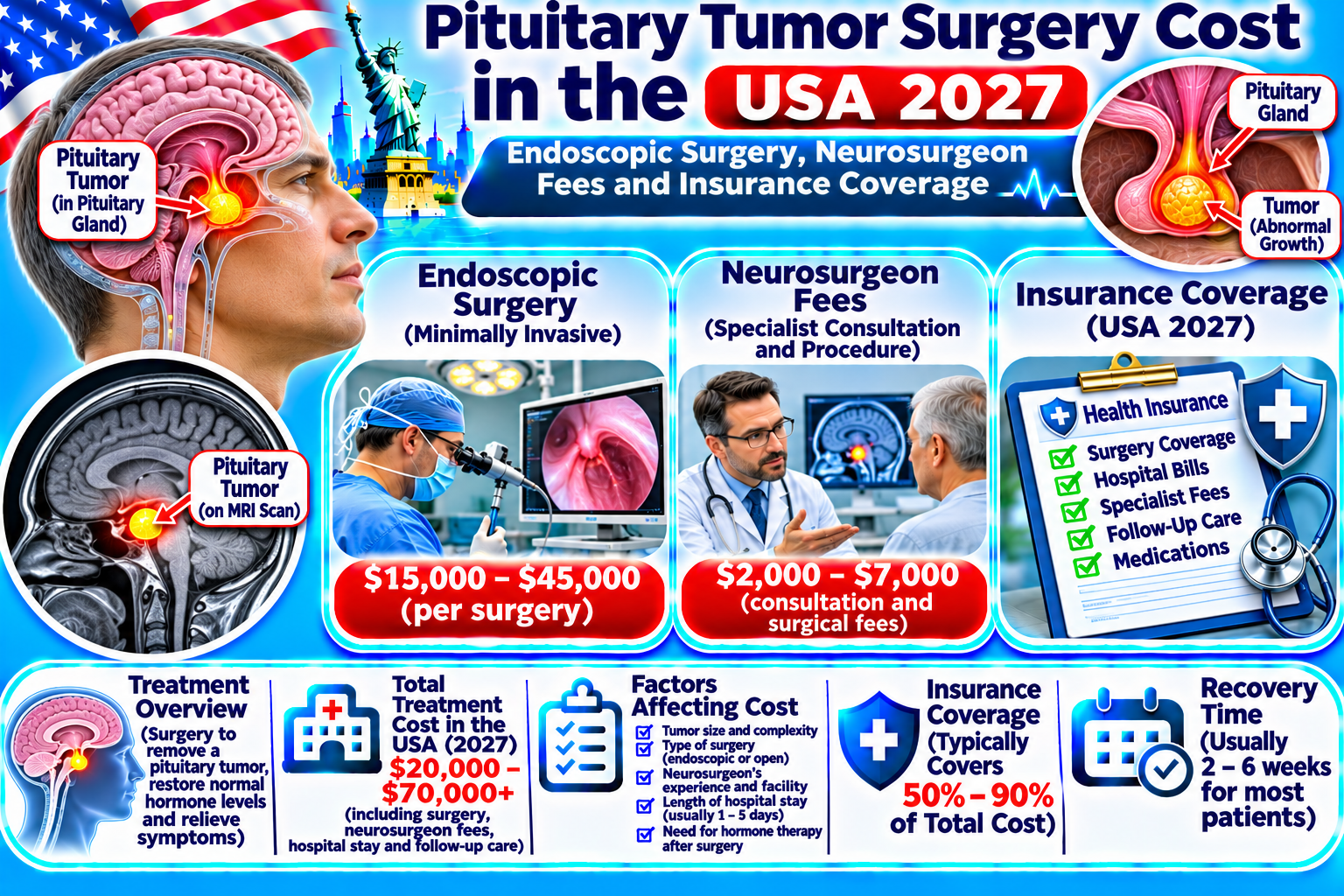
Understanding pituitary tumor surgery costs in the USA in 2027 is important for patients comparing endoscopic transsphenoidal surgery, neurosurgeon fees, hospital bills, anesthesia expenses, diagnostic testing, and health insurance coverage.
The total cost depends on tumor size, hormone activity, surgical approach, hospital resources, insurance benefits, and the need for long-term endocrine treatment. Some patients require surgery, while others benefit from medications or observation.
This comprehensive guide explains estimated American pituitary tumor treatment expenses for 2027, including diagnostic evaluation, endoscopic surgery, specialist fees, hospital charges, recovery, and insurance considerations.
What Is a Pituitary Tumor?
A pituitary tumor is an abnormal growth arising in or near the pituitary gland. Most tumors originating from pituitary tissue are called pituitary neuroendocrine tumors, historically known as pituitary adenomas.
The pituitary gland helps regulate growth, metabolism, reproduction, stress responses, and water balance through hormone production.
A tumor may produce excess hormones, disrupt normal pituitary function, or press against surrounding structures.
Most pituitary tumors are noncancerous, but their location and hormonal effects can create significant medical complications.
Some small tumors remain stable and do not require immediate surgery. Treatment decisions should be based on symptoms, imaging findings, hormone testing, and specialist evaluation.
Types of Pituitary Tumors
Nonfunctioning Pituitary Tumors
Nonfunctioning tumors do not produce clinically significant excess hormones. Larger tumors may cause headaches, visual disturbances, or reduced production of normal pituitary hormones.
Surgery may be recommended when the tumor compresses the optic apparatus or causes other important complications.
Prolactin-Producing Tumors
Prolactinomas produce excessive prolactin and may cause menstrual changes, infertility, sexual dysfunction, or other hormonal symptoms.
Many prolactinomas respond well to medications such as cabergoline. Surgery is generally reserved for selected circumstances rather than being the automatic first treatment.
Growth Hormone-Producing Tumors
These tumors can cause acromegaly in adults, resulting in changes to the hands, feet, facial features, and other body systems.
Surgery is frequently considered when appropriate, sometimes followed by additional medical treatment.
ACTH-Producing Tumors
Some pituitary tumors produce excess adrenocorticotropic hormone, causing Cushing disease.
Patients may develop weight changes, muscle weakness, high blood pressure, diabetes, and other complications associated with excessive cortisol.
Other Pituitary and Sellar Masses
Other lesions near the pituitary gland include Rathke cleft cysts and craniopharyngiomas. These conditions have different treatment requirements and should not be assumed to have identical surgical costs.
Common Symptoms of Pituitary Tumors
Symptoms depend on the tumor’s size, location, and hormone activity.
- Persistent or worsening headaches.
- Blurred vision or loss of peripheral vision.
- Unexplained fatigue.
- Menstrual irregularities.
- Infertility or reduced sexual function.
- Unusual weight or body composition changes.
- Excessive thirst or urination in selected conditions.
- Changes in facial features or hand size.
- Symptoms associated with abnormal cortisol levels.
Sudden severe headache accompanied by visual loss, vomiting, or altered consciousness may indicate pituitary apoplexy and requires emergency evaluation.
How Are Pituitary Tumors Diagnosed?
Diagnosis typically involves collaboration between an endocrinologist, neurosurgeon, and sometimes an ophthalmologist.
Common diagnostic services include:
- Brain and pituitary MRI with contrast.
- Blood tests measuring pituitary hormones.
- Visual field examinations.
- Assessment of thyroid and adrenal function.
- Prolactin and growth hormone-related testing.
- Specialized cortisol testing when indicated.
- Additional imaging for complex tumors.
MRI helps determine tumor size, location, and proximity to critical structures. Hormonal testing helps identify whether the tumor is functioning or affecting normal pituitary activity.
Pituitary Tumor Treatment Options
Observation and Monitoring
Small, asymptomatic tumors may be monitored with periodic MRI examinations and endocrine evaluations.
The monitoring schedule depends on tumor characteristics and clinical findings.
Medication Treatment
Certain hormone-producing tumors respond to medication. Dopamine agonists are commonly used for prolactinomas.
Other medicines may be prescribed to control excessive hormone production or replace hormones that the pituitary gland no longer produces adequately.
Endoscopic Transsphenoidal Surgery
Endoscopic transsphenoidal surgery is a common approach for removing pituitary tumors.
The surgeon accesses the pituitary region through the nose and sphenoid sinus using an endoscope and specialized instruments.
This approach generally avoids a large external skull incision and allows direct visualization of the surgical area.
Microscopic Transsphenoidal Surgery
Microscopic transsphenoidal surgery uses an operating microscope rather than an endoscope.
Both techniques can be effective. The preferred method depends on tumor anatomy, available expertise, and the surgical team’s assessment.
Craniotomy
A craniotomy may be necessary for selected large, unusually positioned, or complex tumors that cannot be adequately treated through the nasal approach.
It generally requires more extensive surgical exposure and may involve higher hospital costs.
Radiation Therapy
Focused radiation may be considered for residual, recurrent, or selected tumors that cannot be safely removed completely.
Radiation is not a replacement for surgery in every case. Treatment selection depends on tumor characteristics and the patient’s medical needs.
How Is Endoscopic Pituitary Surgery Performed?
Endoscopic pituitary surgery is performed under general anesthesia, usually by a neurosurgeon working with an otolaryngologist or skull-base surgeon.
The surgical team guides an endoscope through the nasal passages toward the sphenoid sinus and pituitary region.
Specialized instruments are used to remove the tumor while protecting surrounding nerves, blood vessels, and healthy pituitary tissue.
After tumor removal, the surgical opening may be reconstructed using appropriate tissue or graft materials to reduce the risk of cerebrospinal fluid leakage.
Patients are monitored afterward for neurological changes, fluid balance abnormalities, and hormonal complications.
Pituitary Tumor Surgery Cost in the USA in 2027
American pituitary surgery costs vary substantially according to the treatment approach, tumor complexity, geographic location, hospital contracts, and insurance coverage.
A published US insurance-claims study using historical 2010–2014 data reported an average total payment of approximately $35,602 for transsphenoidal pituitary surgery. This historical payment is not a current hospital quotation or a verified 2027 average.
The following figures are illustrative 2027 financial planning estimates, not guaranteed medical prices or actual patient out-of-pocket payments.
Estimated USA Cost Breakdown
| Treatment or Service | Estimated Cost (USD) |
|---|---|
| Initial Neurosurgeon Consultation | $200–$700+ |
| Endocrinologist Consultation | $150–$500+ |
| Pituitary MRI With Contrast | $800–$3,500+ |
| Hormone Blood Testing | $200–$1,500+ |
| Visual Field Examination | $100–$400+ |
| Endoscopic Transsphenoidal Surgery Episode | $35,000–$85,000+ |
| Microscopic Transsphenoidal Surgery Episode | $30,000–$75,000+ |
| Complex Pituitary Tumor Craniotomy | $70,000–$160,000+ |
| Neurosurgeon Professional Fee | $3,000–$12,000+ if separately billed |
| Anesthesia Professional Fee | $1,000–$4,000+ if separately billed |
| Postoperative Hormone Medication | $10–$500+ per month |
| Follow-Up Specialist Appointment | $100–$400+ |
Important: These broad hypothetical ranges are for preliminary budgeting. A bundled surgery episode may already include neurosurgeon, hospital, anesthesia, imaging, and recovery charges. Do not add separate components without checking for duplicate billing.
USA Pituitary Tumor Surgery Cost Comparison
Because this article focuses on the United States, the following table compares American treatment scenarios rather than different countries.
| USA Treatment Scenario | Illustrative Overall Budget |
|---|---|
| Observation With MRI and Hormone Testing | $1,000–$5,000+ annually |
| Microscopic Transsphenoidal Surgery | $30,000–$75,000+ |
| Endoscopic Transsphenoidal Surgery | $35,000–$85,000+ |
| Complex Pituitary Tumor Craniotomy | $70,000–$160,000+ |
| Surgery With Extended Hospital Care | $60,000–$130,000+ |
These estimates describe different clinical scenarios. Treatment options should not be selected based on price alone.
Neurosurgeon and ENT Specialist Fees
Pituitary tumor surgery often requires a multidisciplinary surgical team, including a neurosurgeon and an ear, nose, and throat specialist experienced in endoscopic skull-base procedures.
Professional fees depend on the tumor’s size, location, surgical complexity, operating time, and insurance contracts.
Some hospitals include specialist charges in a bundled surgical estimate, while others issue separate bills for the neurosurgeon, ENT surgeon, and anesthesiologist.
Patients should request an itemized estimate identifying every professional fee before scheduled surgery.
Hospital Bills and Operating Room Expenses
Hospital expenses represent a substantial portion of pituitary tumor surgery costs in the United States.
Common hospital charges include:
- Operating room and specialized surgical equipment.
- Endoscopic cameras and surgical instruments.
- Neurosurgical navigation technology.
- General anesthesia and recovery monitoring.
- Inpatient accommodation and nursing care.
- Laboratory testing and postoperative imaging.
- Medications and intravenous fluids.
- Intensive care monitoring when necessary.
A published American study examining endoscopic transsphenoidal surgery found that hospitalization length was an important contributor to overall treatment costs.
Longer hospital stays, additional procedures, and unexpected complications can substantially increase expenses.
Endoscopic vs Microscopic Pituitary Surgery Costs
Endoscopic and microscopic transsphenoidal surgery use different visualization techniques to access pituitary tumors.
Endoscopic surgery uses a small camera inserted through the nose, while microscopic surgery uses an operating microscope.
Both approaches require specialized surgical expertise and careful protection of nearby neurological structures.
Historical US insurance research found higher average payments for endoscopic procedures than microscopic operations in its study population.
However, another institutional study found lower inpatient costs with an endoscopic approach. These findings demonstrate that cost differences depend on the healthcare facility, operating efficiency, and patient population.
Neither technique should be selected solely because of its estimated price.
Pituitary Tumor Surgery With Health Insurance
Many comprehensive American health insurance plans cover medically necessary pituitary tumor surgery when applicable clinical requirements are satisfied.
Coverage may depend on symptoms, imaging findings, hormone abnormalities, documented medical necessity, and the proposed surgical procedure.
Important insurance considerations include:
- Annual deductible and out-of-pocket maximum.
- Neurosurgeon and hospital network participation.
- Prior authorization for planned surgery.
- Coverage for endoscopic transsphenoidal procedures.
- Anesthesia and inpatient hospital benefits.
- Diagnostic MRI and laboratory testing coverage.
- Postoperative hormone medication benefits.
- Follow-up endocrinology and neurosurgery appointments.
Insurance approval does not necessarily eliminate personal expenses. Deductibles, copayments, and coinsurance may still apply.
Patients should distinguish between the hospital’s listed charges, the insurer’s negotiated payment, and their own financial responsibility.
Medicare Coverage for Pituitary Tumor Surgery
Original Medicare generally covers qualifying medically necessary pituitary tumor treatment when applicable coverage requirements are met.
Medicare Part A commonly applies to eligible inpatient hospital admissions, while Part B generally covers qualifying physician services and outpatient diagnostic testing.
Prescription medications may be covered through Medicare Part D or another applicable benefit, depending on the drug and treatment circumstances.
Medicare Advantage plans may have different authorization requirements, provider networks, and cost-sharing arrangements.
Patients should verify their individual coverage before scheduled treatment.
Medicaid and Financial Assistance
Medicaid may cover medically necessary pituitary tumor treatment for eligible individuals, depending on state-specific requirements.
Some nonprofit hospitals provide financial assistance programs for patients who meet income or other eligibility criteria.
Hospital financial counselors can explain payment arrangements and available assistance programs.
Pituitary Tumor Surgery Without Insurance
Uninsured patients may face substantial expenses for diagnostic imaging, endocrine evaluation, surgery, hospitalization, and postoperative monitoring.
Before accepting a planned treatment quotation, patients should ask:
- Are neurosurgeon and ENT specialist fees included?
- Does the estimate include anesthesia?
- Are operating room and hospital charges covered?
- Will intensive care monitoring cost extra?
- Are postoperative MRI examinations included?
- What additional hormone testing is expected?
- Does the hospital offer financial assistance?
Patients should request written estimates that identify included services and potential additional charges.
Factors Influencing Pituitary Tumor Surgery Prices
1. Tumor Size and Complexity
Larger tumors or those extending toward important blood vessels and nerves may require more extensive surgery and monitoring.
2. Surgical Technique
Endoscopic surgery, microscopic surgery, and craniotomy involve different equipment, staffing, and operating room requirements.
3. Hospital and Neurosurgeon Fees
Professional services, facility resources, surgical duration, and hospital accommodation affect total expenses.
4. Insurance Coverage
Deductibles, negotiated rates, provider networks, and authorization requirements influence personal financial responsibility.
5. Geographic Location
Healthcare prices differ across American cities and states because of regional operating expenses and insurance contracts.
6. Hormone Medications
Some patients require temporary or lifelong hormone replacement therapy, increasing long-term treatment expenses.
7. Complications and Additional Procedures
Unexpected complications, extended hospitalization, or repeat surgery may substantially increase medical spending.
Recovery After Pituitary Tumor Surgery
Recovery depends on the surgical approach, tumor characteristics, hormone function, and overall health.
Patients undergoing uncomplicated endoscopic transsphenoidal surgery commonly remain hospitalized for a few days, although the duration varies.
Temporary nasal congestion, fatigue, headaches, and discomfort may occur during early recovery.
Surgeons often recommend avoiding heavy lifting, forceful nose blowing, and activities that increase pressure in the head during the initial healing period.
Some patients return to light activities within several weeks, while complete recovery may take longer.
Patients should follow individualized postoperative instructions from their surgical team.
Possible Complications and Additional Costs
Pituitary surgery carries potential risks, including bleeding, infection, cerebrospinal fluid leakage, visual changes, and injury to surrounding structures.
Some patients develop temporary or permanent pituitary hormone deficiencies requiring medication.
Postoperative water-balance disorders, including diabetes insipidus or low blood sodium, may require additional monitoring and treatment.
Unexpected complications can increase hospital expenses, medication requirements, and follow-up appointments.
Hormone Replacement and Long-Term Expenses
Some patients experience improved hormone function after tumor removal, while others require ongoing endocrine treatment.
Hormone replacement may include thyroid hormone, cortisol replacement, sex hormones, or desmopressin when medically indicated.
Medication costs depend on the prescribed drug, dosage, treatment duration, and insurance benefits.
Regular blood tests are important for monitoring hormone levels and adjusting treatment safely.
Patients should never discontinue essential hormone replacement without medical guidance.
Follow-Up MRI and Specialist Monitoring
Long-term follow-up is important after pituitary tumor treatment because residual or recurrent tumors may require additional care.
Monitoring may include:
- Periodic pituitary MRI examinations.
- Hormone blood testing.
- Endocrinologist appointments.
- Neurosurgical follow-up visits.
- Vision examinations when indicated.
- Medication adjustments.
The frequency of monitoring depends on tumor type, completeness of removal, hormone activity, and specialist recommendations.
How to Reduce Pituitary Tumor Surgery Costs
- Verify insurance coverage before planned surgery.
- Request a complete written hospital estimate.
- Confirm neurosurgeon and facility network participation.
- Ask whether ENT and anesthesia fees are included.
- Review MRI and hormone testing benefits.
- Explore hospital financial assistance programs.
- Discuss medically appropriate treatment alternatives.
- Plan for postoperative medications and monitoring.
The least expensive treatment is not necessarily the safest or most effective option. Specialist expertise and medical suitability remain essential.
Frequently Asked Questions
How much does pituitary tumor surgery cost in the USA in 2027?
Illustrative endoscopic transsphenoidal surgery expenses may range from approximately $35,000 to $85,000 or more. Complex cases requiring craniotomy or extended hospitalization may cost substantially more.
Does insurance cover pituitary tumor surgery?
Many comprehensive insurance plans cover medically necessary pituitary tumor operations, subject to policy requirements, authorization, and patient cost-sharing.
Does Medicare cover endoscopic pituitary surgery?
Medicare generally covers qualifying medically necessary pituitary surgery under applicable hospital and physician benefits.
Is every pituitary tumor removed surgically?
No. Some tumors are monitored, while others respond to medication. Treatment depends on tumor type, symptoms, and hormone activity.
Is endoscopic pituitary surgery open-brain surgery?
Endoscopic transsphenoidal surgery usually accesses the pituitary gland through the nose rather than through a conventional skull-opening approach.
How long does recovery take?
Many patients resume light activities within several weeks, although full recovery varies according to the operation and individual circumstances.
Can a pituitary tumor return after surgery?
Yes. Residual tumor growth or recurrence can occur, making long-term imaging and endocrine monitoring important.
Conclusion
Pituitary tumor surgery costs in the USA in 2027 depend on endoscopic surgical techniques, neurosurgeon fees, hospital bills, tumor complexity, hormone treatment, and insurance coverage.
Patients should compare complete treatment estimates, verify insurance benefits, and consult an experienced pituitary treatment team before making decisions.
Accurate diagnosis, appropriate surgical planning, and consistent postoperative monitoring are essential for managing pituitary disorders and long-term healthcare expenses.
Medical Disclaimer: This article provides general educational and financial planning information only. It does not replace professional medical advice, diagnosis, or treatment. All 2027 prices are illustrative estimates and should be verified directly with healthcare providers, hospitals, pharmacies, and insurance companies.
